



La Frontera 🌵 Podcast, Episode 22 - The LatAm Climate Edge
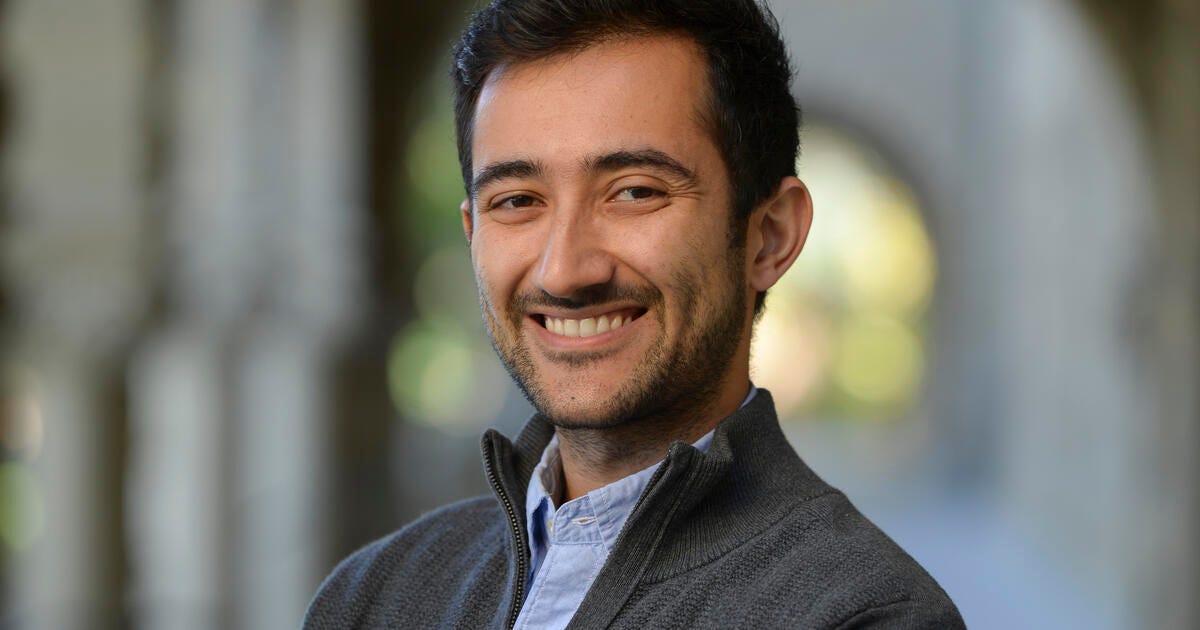
This week on La Frontera, we sat down with Benjamin Zehr, Co-Founder of Reciprocal, a venture platform focused on unlocking climate and nature innovation across Latin America and the Caribbean.
At first glance, this might sound like a climate episode.
It is. But like many of the conversations we keep coming back to, it quickly becomes something broader.
It is about how capital actually flows. About how narratives shape entire categories. And about why one of the most resource-rich regions in the world continues to receive a fraction of the investment it arguably deserves.
Ben and his team at Reciprocal are building toward a clear idea: that Latin America is not just a participant in climate innovation, but can become one of its primary engines.
And importantly, that shift is already underway.
Since recording this episode, Reciprocal has grown to a team of six and has raised a fund to invest directly into pre-seed and seed stage climate and nature tech startups across the region. They’ve also launched two specialized acceleration programs and are continuing their ecosystem work with support from heavyweights like Builders Vision and Breakthrough Energy. When Tom caught up with Ben in Mexico City this February, just before he traveled to Mérida for Foro Latinoamericano de Inversión de Impacto, it was clear that both the conviction and the execution behind the thesis are accelerating.
If you are an investor thinking seriously about climate, this is a conversation worth spending time with in full. We strongly encourage you to listen on Spotify or Apple Podcasts, or watch on YouTube. Many of the nuances, especially around how these markets actually function, come through best directly in the conversation.
🎧 Listen on Spotify HERE
🎧 Listen on Apple Podcasts: HERE
🎥 Watch on YouTube HERE
In Today’s Newsletter
Why less than 0.5% of climate VC flows to a region representing ~8% of global GDP
The structural advantages behind the “LatAm Climate Edge”
Three investment theses with asymmetric upside
Where the market is mispricing risk and why that matters
Early signals from companies already building in the region
Reciprocal’s role in bridging capital and innovation
A closing reflection on building in climate, including Ben’s perspective on pace, balance, and long-term thinking

Reciprocal Studio
💰 Assets Under Management: $1m
🗽 HQ: USA
🌱 Stage Focus: Pre-seed and seed
🌍 Geographic & Thematic Focus: Latin America & the Caribbean; Working Land, Blue Economy, Nature Tech
🧾 Check Size: Typically around $70-100k (≈1%–2%)
⭐ Notable Investments: Satellites on Fire
🎯 Exit Strategy: Secondaries, strategic acquisitions
Who is Ben Zehr?
Ben’s perspective is shaped less by theory and more by proximity.
He grew up between the United States and India (and has lived in other places, like Chile), in an agricultural family, where climate was not an abstract topic but something visible in everyday life. Water scarcity, drought cycles, and the fragility of farming systems were constant realities.
That early exposure carried forward into his work. He later founded a hydroponics company in India, focused on controlled environment agriculture, and saw firsthand both the potential and the limits of technology when operating within larger systems.
Over time, his focus widened. Climate, as he describes it, is not a single problem but a network of interdependent systems that require coordination as much as innovation.
That perspective eventually led him to Latin America.
“We saw a tremendous amount of opportunity in the region, but it hasn’t been supported or invested in for the longest time. We see that as a structural mistake.”
What Reciprocal is Building
Reciprocal is structured less like a traditional fund and more like a platform designed to reduce friction across the climate ecosystem.
Their work spans three core areas:
Supporting founders building climate and nature solutions
Running programs that connect startups with real industry demand
Bridging global capital into the region
At its core, the problem they are addressing is coordination.
“The idea is that Reciprocal can act as connective tissue between LATAM and the rest of the world.”
For investors, this matters.
Climate innovation, especially in areas like materials, agriculture, and energy, often requires longer development cycles and deeper integration with existing industries. The ability to connect startups with corporates, pilots, and capital is not a “nice to have.” It is a prerequisite for success.
The 0.5% Allocation Problem
The most important number from this conversation is also the simplest:
Less than 0.5% of global climate tech venture capital flows to Latin America.
Now contrast that with:
8% of global GDP
40% of global biodiversity
50% of the world’s primary forests
65% renewable energy penetration (vs 40% global average)
From an investor’s perspective, this is not just an imbalance. It is a mispricing of opportunity.
Capital has historically concentrated in the United States and Europe, where ecosystems are more mature and narratives are clearer. Meanwhile, Latin America has been more strongly associated with fintech, which has absorbed roughly 40–45% of venture flows into the region.
Climate has lagged.
Not because the opportunity is smaller, but because it is less clearly defined.
“There’s lots of talk of potential, but beyond that, it’s important to put data behind those stories.”
The Narrative Gap
One of the more subtle but important takeaways is that Latin America’s challenge is not just capital. It is narrative.
India, for example, is often framed as a single macro opportunity. Latin America, by contrast, is fragmented in how it is perceived. Investors tend to underwrite individual countries rather than the region as a whole.
That framing obscures a key advantage.
“One of the most underleveraged assets of the region is its interdependence.”
Across much of the region, there are shared languages, similar operating environments, and business models that translate across borders more easily than expected. (This theme echos a conversation we had with Luis from NAZCA)
For investors, this has two implications:
Markets may be larger than they initially appear
Companies can scale regionally with fewer frictions than assumed
This is where narrative and capital intersect. Without a clear story, capital hesitates. With one, it can move quickly.
The LatAm Climate Edge
To make that story more concrete, Reciprocal outlines four structural advantages:
Natural Capital
Latin America holds a disproportionate share of the world’s ecosystems, many of which are directly tied to climate outcomes and economic value creation.
Technical Talent at Lower Cost
High-quality engineering and scientific talent, often at significantly lower cost than in the U.S. or Europe, enables more capital-efficient R&D.
Market Maturity
Large, established sectors such as agriculture, energy, and industrials provide real environments for testing and scaling solutions.
Technology Readiness
With renewable energy already making up roughly 65% of the grid in many countries, the region is well positioned to adopt and integrate new technologies.
Taken together, this creates a dynamic where companies can be built efficiently, validated locally, and expanded globally.
Where the Alpha Is Emerging
Within that framework, several themes stand out from an investment perspective.
Biomass to X
Latin America produces significant agricultural and industrial waste. Converting that into higher-value products, such as materials, chemicals, or inputs, represents a large and underexplored opportunity.
Distributed Energy and Grid Optimization
As climate volatility increases, so does the need for resilient energy systems. Solutions that improve how energy is generated, distributed, and managed are becoming increasingly important.
“It’s not just about generating power, but how we use it.”
Land Use as a Primary Lever
Perhaps the most underappreciated insight:
“It’s the only region where land use, agriculture, and forestry contribute more than fossil fuels to emissions.”
This shifts the focus of climate investing in the region. Agriculture and land management are not peripheral. They are central.
Revisiting Risk
A common hesitation among investors is risk, often framed through the lens of infrastructure.
Ben breaks this into political, economic, and physical dimensions, and argues that much of the perceived risk is based on outdated assumptions.
“If you look at Latin American countries today, they seem remarkably mature in some ways.”
This does not mean the region is without challenges. But it does suggest that risk may be mispriced, and that mispricing can create opportunity for investors willing to engage more deeply.
Building the Missing Layer
Reciprocal’s role is to help close the gap between opportunity and execution.
Through programs focused on areas like the blue economy and agricultural decarbonization, they are working to connect startups with corporates and move them toward real commercial outcomes.
The underlying belief is simple:
Climate innovation requires coordination.
Capital alone is not enough.
A Closing Reflection on Building, Pace, and Perspective
Toward the end of the conversation, the tone shifts.
After discussing capital flows, market dynamics, and investment theses, the conversation turns to something more personal.
Ben reflects on the environments he grew up in and the long-term nature of the problems he is working on. Climate, by definition, is not a space where outcomes are immediate. Progress is often slow, nonlinear, and difficult to measure in the short term.
That reality shapes how he thinks about work.
There is an emphasis on sustainability, not just in the environmental sense, but in how people build and operate over time.
The work requires patience. It requires stepping back occasionally to maintain perspective. It requires an ability to operate without constant feedback loops or immediate wins.
There is also a recognition that some of the most important insights and decisions do not happen in structured settings, but in longer, deeper conversations, often away from screens and day-to-day noise.
In a space like climate, where timelines stretch over decades, that perspective becomes part of the strategy.
It is not just about moving fast. It is about moving deliberately, and being able to sustain that effort over time.
Closing Thoughts
Latin America occupies a unique position in the global climate landscape.
It combines natural resources, technical talent, and market readiness in a way that few regions do. At the same time, it remains significantly underrepresented in the allocation of venture capital.
That gap is not just a challenge. It is an opportunity.
For investors willing to spend time understanding the region, to move beyond simplified narratives, and to engage with the underlying dynamics, there is a case to be made that some of the most compelling climate opportunities of the next decade will emerge here.
We would strongly encourage you to listen to or watch the full conversation with Ben. Many of the nuances and perspectives come through most clearly in his own words.
Listen & Share
🎧 Listen to the full conversation and subscribe to La Frontera 🌵 for more founder and investor stories.
🎧 Listen on Spotify HERE
🎧 Listen on Apple Podcasts: HERE
🎥 Watch on YouTube HERE
Be sure to share La Frontera with your network if you enjoy our newsletters!