



La Frontera 🌵 Podcast, Episode 20 - Fintech Storytelling, Building Credit & Credibility
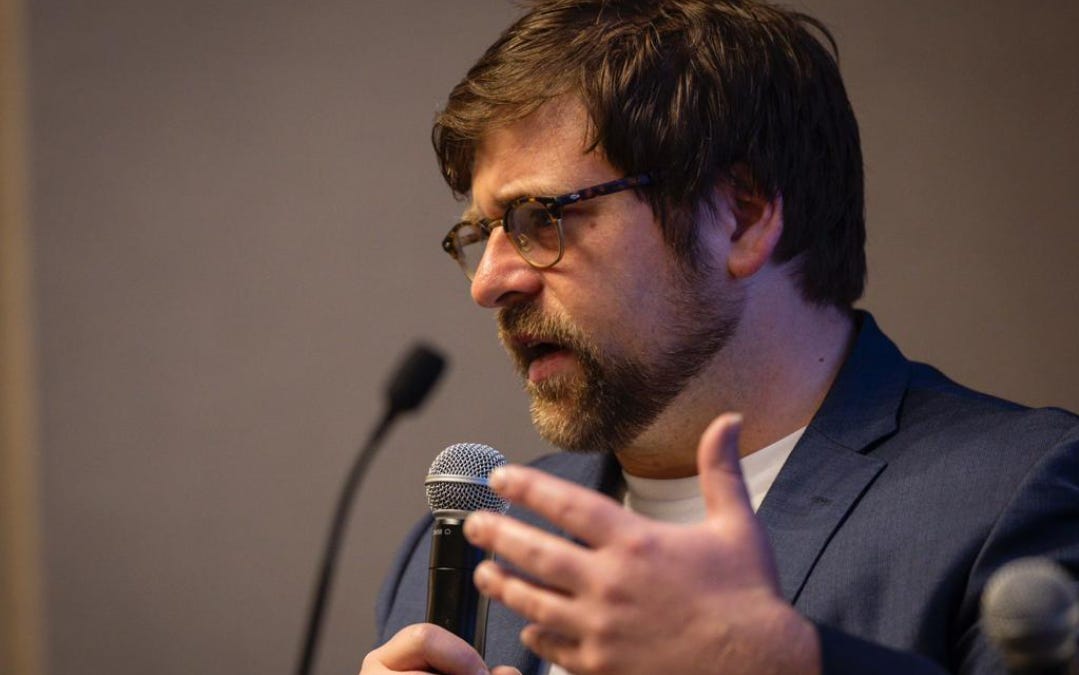
This week on La Frontera, we sat down with Andrew Endicott, GP at Gilgamesh Ventures and former co-founder and president of Petal—one of the earliest fintech companies to challenge traditional credit underwriting by using cash-flow data instead of credit scores.
It’s one of those conversations that looks like a fintech episode on the surface, but ends up being something deeper: a discussion about how people make decisions inside complex systems, how founders earn trust over time, and why Latin America continues to produce some of the most compelling fintech businesses in the world.
Andrew brings a rare mix of perspectives to the table. He’s a lawyer by training, a founder who built inside U.S. financial regulation, and now an investor who’s spent years developing pattern recognition across the U.S. and Latin America. He’s thoughtful without being academic, opinionated without being dogmatic—and refreshingly honest about what he doesn’tknow.
We talk about fintech complexity, regulatory tradeoffs, the capital cycle behind lending businesses, storytelling as companies scale, and the “light-bulb moment” that led to Gilgamesh’s LatAm thesis. We also wander into employee compensation, investor psychology, and why spending time away from screens might be one of the most underrated founder skills.
If you’re a founder building in fintech—or an investor trying to understand why some teams win and others stall—this episode is pure gold. 🏆
🎧 Listen on Spotify HERE
🎧 Listen on Apple Podcasts: HERE
🎥 Watch on YouTube HERE
In Today’s Newsletter
Fintech Complexity — Why the best fintech founders think in layers, balancing systems thinking, speed, and regulation while understanding how financial infrastructure actually works.
Petal Origins: Pioneering Cash Flow Underwriting — How Andrew and Jason, both lawyers, bet early on cash-flow underwriting in a post–financial crisis regulatory gray area and helped redefine how credit could be assessed.
Raising Capital — The capital cycle no one warns founders about, where trust with early VCs unlocks debt markets and timing often matters more than valuation.
Building Trust with Investors — Why relationships, advisors, and credible “sherpas” matter more than charisma when navigating high-stakes fundraising moments.
Being on the Investor Side of the Table — Founders make daily decisions while investors make a few big ones, forcing founders to distill complexity into clear, narrative-driven takeaways.
Storytelling Gets Harder as the Company Grows — How founder storytelling evolves from a blank slate to data-backed credibility as companies scale and face greater scrutiny.
Origin Story of Gilgamesh — The lightbulb moment that emerged from long-standing relationships, Mexico expansion conversations, and realizing how fast fintech could scale in Latin America.
Lending Businesses in LatAm — Why lending is harder to start but easier to win in Latin America, with stronger margins, less competition, and clearer paths to profitability at scale.
Capital Structure & FX Reality — Why in balance-sheet businesses the product is capital itself, and decisions around equity, debt, and currency risk can determine outcomes.
Cash vs Equity Compensation — Why stock options often fail employees in practice, and how higher cash pay and simpler ownership structures can better align incentives.
Taking Time Away From the Screen — How disconnecting, spending time outdoors, and reading deeply helps founders maintain clarity and think long-term.

Gilgamesh Ventures
💰 Assets Under Management: $35m
🗽 HQ: NYC
🌱 Stage Focus: Pre-seed and seed
🌍 Geographic Focus: Global
🧾 Check Size: Typically around $500k (≈2.5%–5%)
📊 Portfolio: 40 companies
⭐ Notable Investments:
🎯 Exit Strategy: Secondaries play a role, but the primary focus is IPOs
Why the Best Fintech Founders Think in Layers, Not Straight Lines
Fintech attracts a certain kind of person.
Not because it’s glamorous (it usually isn’t), but because it sits at the intersection of technology, regulation, capital, and human behavior. Andrew argues that what separates strong fintech founders from the rest isn’t a specific background—it’s an appreciation for complexity.
“Anytime you’re dealing with the financial system, there’s a lot of complexity. And complexity often favors people who can see things in multiple different ways.”
The best founders aren’t just product thinkers or technologists. They care about how things work at a basic level: where money actually flows, how incentives are structured, and why certain rules exist in the first place.
That mindset becomes especially important when you run into the core fintech tension: speed versus compliance.
Startups are rewarded for moving fast. Regulated industries punish shortcuts later. Navigating that tradeoff—without freezing progress or accumulating existential risk—is one of the hardest parts of building in fintech.
Andrew doesn’t pretend there’s a perfect answer. But he’s clear that ignoring complexity doesn’t make it go away. It just shows up later, usually at the worst possible moment.
Underwriting the Invisible: How Petal Bet on Cash Flow Before It Was Obvious
Petal started with a simple but contrarian question: What if credit scores don’t tell the full story?
Andrew and his co-founder Jason were both lawyers, not career bankers. That turned out to be an advantage. They were less attached to legacy frameworks—and more willing to question why things were done a certain way.
Coming out of the financial crisis, the regulatory environment had stabilized just enough to allow experimentation. There was more clarity than in the immediate post-2008 chaos, but still plenty of gray areas.
Petal’s key insight was to use bank account data—cash-flow underwriting—to assess creditworthiness, especially for people with thin or nonexistent credit files.
“There was all this information sitting in bank accounts that the bureaus just didn’t capture.”
At the time, this approach sat squarely in a regulatory gray zone. Partners cared deeply about compliance. Banks wanted to understand exactly how risk was being assessed. And infrastructure like Plaid was only just emerging.
The bet was that access to real financial behavior—income consistency, spending patterns, cash buffers—would be a better predictor of credit risk than historical bureau data alone.
Looking back, it’s easy to frame this as an “AI” or “data” story. At the time, it was simply a bet on better inputs—and a belief that regulation would evolve to accommodate them.
The Capital Cycle No One Warns You About: Equity, Debt, and Timing Risk
One of the most practical parts of the conversation is Andrew’s breakdown of how capital actually works in lending businesses.
Most founders think of fundraising as episodic. In reality, lending companies live in a continuous capital cycle.
You start with equity—often venture capital—to build the product, team, and initial proof points. Once you have traction, you approach debt investors to fund the balance sheet. As you scale, you raise more equity to unlock more debt. And the cycle repeats.
Each step comes with a different audience, different incentives, and different risk tolerances.
“Lenders can literally get fired for one bad investment. Their job is to not make mistakes.”
Equity investors are underwriting upside. Debt investors are underwriting survival.
The real risk isn’t just cost of capital—it’s timing. Markets change. Windows open and close. If you need capital at the wrong moment, your negotiating leverage disappears.
Andrew’s advice is implicit but clear: founders need to think about capital strategy as deliberately as they think about product strategy.
Climbing the Mountain With Sherpas: Why Credibility Beats Charisma
Early fundraising often feels transactional. Over time, it becomes relational.
Andrew emphasizes the importance of trust compounding—with investors, advisors, and networks that can guide you through moments you haven’t experienced before.
“You want people who’ve climbed the mountain before. Sherpas who can tell you where the cliffs are.”
This is where “blue-chip” investors matter—not for their logos, but for the signal they send to everyone else. Credibility reduces friction. It opens doors. It buys you time when things get messy.
The best advisors don’t just help you raise money. They help you tell the story correctly, anticipate second-order effects, and avoid mistakes you didn’t even know were possible.
In fintech especially, trust isn’t a soft asset. It’s infrastructure.
Founders Decide Every Day. Investors Decide a Few Times a Year.
One of Andrew’s sharpest observations comes from switching sides of the table.
Founders make high-stakes decisions every day. Investors make a handful of big decisions each year. That asymmetry shapes behavior more than most people realize.
As perceived complexity goes up, investor attention goes down.
“If it gets too complicated, people just start nodding their heads—and that’s not good.”
The founder’s job isn’t to explain every nuance. It’s to distill the business down to a few core truths that someone can carry with them after the meeting ends.
Andrew makes a broader point about human psychology: we are deeply narrative-driven. That’s not always ideal—but it’s reality.
“The world doesn’t function on stories. But people do.”
Founders who understand this don’t oversimplify—they clarify.
From Blank Slate to Burden of Proof: How the Founder Story Evolves
Storytelling changes as companies grow.
Early on, you have a blank slate. You can paint a bold vision. You can emphasize potential over proof. As long as the story is coherent, investors are willing to lean in.
As the company matures, the narrative tightens.
Growth investors scrutinize what you’ve actually done. Data replaces hypotheticals. Inconsistencies get exposed.
Andrew’s advice is pragmatic: stick to the facts—but choose which facts to emphasize.
Credibility then comes from alignment between story and reality.
The Lightbulb Moment: How Gilgamesh’s LatAm Thesis Came Together
Gilgamesh Ventures didn’t start as a fund with a predefined LatAm thesis.
It started with relationships.
Andrew and Miguel had known each other for years. Miguel invested in Petal. At one point, Andrew asked him for advice on how to tell the story of expanding into Mexico.
That conversation led to others—with founders at Klar and Neon. Those relationships turned into deep operating discussions.
And then something clicked.
The growth rates were higher. The paths to profitability were clearer. The competitive dynamics were fundamentally different.
Klar ended up being Gilgamesh’s first investment—done directly through an SPV.
Harder to Start, Easier to Win: Why LatAm Lending Scales Differently
Andrew draws a sharp contrast between the U.S. and Latin America.
In the U.S., it’s relatively easy to start a lending business. Infrastructure is mature. Capital is abundant. Competition is brutal. Margins get compressed.
In Latin America, it’s the opposite.
It’s harder to stand up the rails. Regulation is fragmented. Trust takes longer to earn. But once you reach scale, the economics can be compelling.
“You don’t have to fight as hard to make it profitable.”
Better margins. Stronger unit economics. Faster paths to sustainability.
Klar’s recent $190M Series C is a reflection of that dynamic—but also of how difficult it is to get there in the first place.
The Balance Sheet Is the Product: Equity First, Debt Second, FX Always
If you’re building a lending business in LatAm, your balance sheet is the product.
The sequencing matters. You typically start with equity, then layer in debt. And currency choice is critical.
Raising capital in local currency reduces risk. Raising in dollars often requires hedging FX exposure, which adds real cost.
“Those basis points matter.”
Andrew is clear: many businesses look great on paper until FX volatility exposes fragile assumptions.
Founders who understand this early build more resilient companies. Those who don’t often learn the hard way.
The Broken Promise of Stock Options (and What to Do Instead)
Toward the end of the conversation, Andrew takes a sharp turn into employee compensation—and doesn’t pull punches.
In theory, equity aligns incentives. In practice, U.S. stock options often put employees in impossible positions: short exercise windows, large cash outlays, and asymmetric information.
“You’re asked to make a meaningful financial decision very fast, with almost no information.”
His recommendation is provocative but practical: pay people fairly in cash. If you give equity, make it real ownership—and consider having the company bear the tax burden.
Incentives should empower employees, not stress them out.
Zooming Out to See Clearly: Nature, Reading, and Thinking Long-Term
We closed on something deceptively simple.
Andrew talks about getting outside. About Wyoming. About reading. About stepping away from screens.
“There’s a direct relationship between time not at a screen and being in a better mental frame.”
In a world obsessed with optimization, it’s a reminder that clarity often comes from distance.
Listen & Share
🎧 Listen to the full conversation and subscribe to La Frontera 🌵 for more founder and investor stories.
🎧 Listen on Spotify HERE
🎧 Listen on Apple Podcasts: HERE
🎥 Watch on YouTube HERE
Be sure to share La Frontera with your network if you enjoy our newsletters!